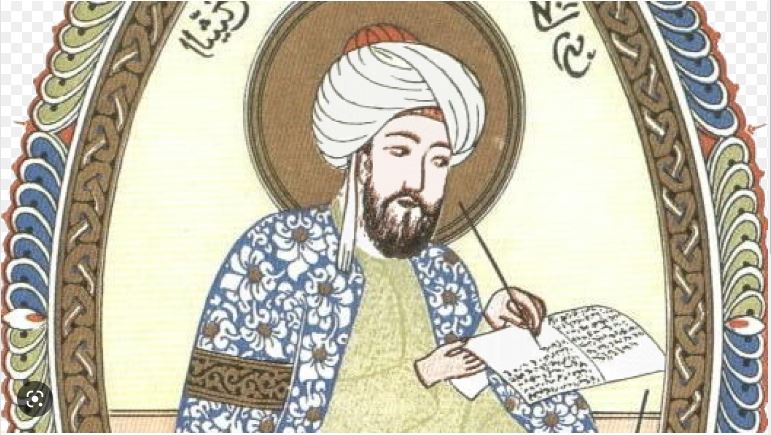
Ibn Sīnā’s Proof of the Necessary Existent
Introduction
The Persian Muslim philosopher Ibn Sīnā—known in the West as Avicenna—was one of the most influential and versatile polymaths in history. His works shaped both Islamic philosophy and medieval Christian Scholasticism. His Canon of Medicine was studied in Europe until the 18th century, while his metaphysical writings became foundational for philosophy of religion.
One of his greatest contributions is his Burhān al-Ṣiddīqīn (“The Proof of the Truthful”), a rational demonstration for the existence of God. At its heart lies the distinction between contingent existence and necessary existence. For Ibn Sīnā, God is al-Wājib al-Wujūd—“the Necessary Existent.”
Necessary vs. Contingent Truths
To understand Ibn Sīnā’s proof, we must first grasp the philosophical difference between necessary and contingent truths:
A necessary truth is one that cannot be false. Its denial leads to contradiction. For example:
All bachelors are unmarried. By definition, a bachelor is unmarried. To say “a married bachelor” is a contradiction.
2 + 2 = 4. This is true in all possible worlds; denying it would be absurd.
A contingent truth is one that happens to be true but could have been false. For example:
Tony got married on a Saturday. This is true, but Tony could have been married on a Wednesday.
Jane is five-foot-three. She could have been taller or shorter; there’s no contradiction in imagining that.
Philosophers often explain this in terms of possible worlds. If something is true in every possible world, it is necessary. If it is true in some but not all possible worlds, it is contingent.
Necessary vs. Contingent Beings
The same distinction applies to existence:
A contingent being is something that exists but could have failed to exist. For example:
A coffee cup exists, but it could easily not have existed.
You and I exist, but we might not have been born at all.
The entire physical universe, being made of contingent parts, is itself contingent.
A Necessary Being, on the other hand, is something that cannot not exist. Its existence is essential and eternal. Denying its existence leads to contradiction.
This is precisely the Being Ibn Sīnā identifies with God.
Three Categories of Existence
Ibn Sīnā systematically classifies all possible things into three categories:
Impossible beings (mumtani‘ al-wujūd) – things that cannot exist (e.g., a square circle).
Contingent beings (mumkin al-wujūd) – things that might exist or might not; their existence depends on causes.
Necessary Being (wājib al-wujūd) – something that must exist by its very essence.
Step-by-Step Proof
A simplified outline of his reasoning is:
Contingent beings exist.
Every contingent being requires a cause or explanation.
A contingent being cannot cause itself; otherwise it would still require explanation.
Therefore, the cause must either be:
another contingent being, or
a Necessary Being.
An infinite chain of contingent beings cannot ultimately explain existence.
Therefore, there must exist a Necessary Being that explains contingent existence.
Thus, a Necessary Existent (God) must exist.
As Ibn Sīnā puts it:
“That which is impossible will never be. That which is contingent, before its existence, is preceded by the contingency of its being.”
(Kitāb al-Najāt, Metaphysics I, ed. Fakhry, p. 255)
The Contingency of the Whole Universe
Ibn Sīnā makes a profound move here: even if we consider the entire universe—all contingent beings together—it remains contingent. The whole cannot be necessary if each of its parts is contingent. Just as Tony’s wedding date required an explanation outside himself, so too the universe as a whole requires an external explanation.
That external cause cannot itself be contingent. It must be necessary.
Attributes of the Necessary Existent
From this, Ibn Sīnā concludes that the Necessary Existent must have specific attributes:
Simplicity: It has no parts, for then it would depend on them.
Immateriality: It is not bound by matter, space, or time.
Unity: There cannot be two Necessary Existents, since distinction would require limiting features.
Incomparability: It has no opposite or genus; its essence is existence itself.
As he writes:
“The First has no alike, no contrary, no genus and no difference. It cannot be indicated except by pure intellectual knowledge.”
Conclusion
Ibn Sīnā’s argument remains one of the most sophisticated rational demonstrations for the existence of God. By carefully distinguishing between necessary and contingent truths—and then extending this to necessary and contingent beings—he shows that the existence of the universe demands explanation.
The answer is not found in an endless chain of contingent causes, but in the existence of one Necessary Being: the foundation of all reality, without whom nothing could exist.
In modern language, he has provided a rigorous response to the timeless question:
“Why is there something rather than nothing?”
The Necessary One – A Poem
Why is there something, and not the dark of void?
The question haunts me, like a silent star
Gazing upon my restless heart.
I wander through fields where every flower whispers:
“I could have never been.”
The brook that sings, the clouds that drift,
Even I —
this trembling frame,
these fleeting thoughts,
all could have failed to rise.
What am I but a shadow,
a fragile child of causes
stretching backward beyond my sight?
My parents’ hands gave me breath,
but who gave them theirs?
I see only chains of contingency,
delicate links of chance
clinking, endless, down a corridor
that cannot end in nothing —
yet cannot explain itself.
Avicenna speaks,
his words fall like cool rain
upon the fever of my soul:
“The impossible shall not be,
the contingent awaits another hand,
but the Necessary —
the Necessary is by itself,
its very nature is existence,
its breath is Being,
its pulse is Reality.”
I look to the sky,
its vastness presses me
with the weight of contingency.
This universe —
this tapestry of dust and fire,
of laughter and sorrow,
of blossoms that wither,
of suns that flare and die —
it too could have never been.
The whole is contingent,
as frail as its parts,
a bubble upon the sea of non-being.
And bubbles burst.
O Necessary One!
Hidden root of roots,
ground of all that is,
without You there would be only silence,
only absence,
only the dark sigh of Nothing.
Yet You are —
You must be.
Not by chance,
not by another,
but by the very certainty of Yourself.
Being is Your garment,
Eternity Your dwelling,
Necessity Your name.
I see it now —
the scales of existence,
where each possible thing waits in trembling balance,
needing a hand to tilt it toward being.
And You, O Eternal Hand,
are the one who tips the scales.
Without You, the scales would never move,
and we —
the lovers, the wanderers, the mourners —
would never weep, never sing, never dream.
How fragile we are,
contingent sparks in the night!
And yet how wondrous,
that our frailty points beyond itself,
that every fading blossom,
every vanishing star,
whispers Your secret:
“There must be One who cannot not be.”
O God, O Necessary Existent!
You stand where thought can go no further,
the shore where reason bows its head
and love takes wing.
You are the answer to my torment,
the balm for the question
that gnawed my soul:
“Why is there something, and not nothing?”
It is because of You.
Always You.
The Necessary,
the Eternal,
the One.